
After a serious accident, one of the most common questions people ask is:
“Can I sue for pain and suffering?”
The short answer is: Yes — but not in every case.
Ontario law allows injured individuals to claim compensation for pain and suffering through a tort claim (lawsuit). However, strict legal requirements apply, and not every injury qualifies.
Below is a clear explanation of when you may be able to sue, what conditions must be met, and what factors affect your potential claim.
What Is “Pain and Suffering” in a Legal Context?
Pain and suffering refers to non-economic damages — losses that do not have a direct financial cost but significantly affect your life.
This may include:
- Physical pain resulting from injuries;
- Emotional distress or psychological impact;
- Loss of enjoyment of life; and,
- Reduced ability to participate in daily activities.
Unlike medical expenses or lost income, these damages are more subjective and are assessed based on the overall impact of the injury.
When Can You Sue for Pain and Suffering in Ontario?
In Ontario, you generally have the right to sue for pain and suffering if:
- Another party was negligent;
- That negligence caused your injuries; and,
- Your injuries meet the legal threshold required by law.
This type of claim is typically part of a tort claim against the at-fault driver.
However, meeting these conditions is not automatic. Ontario applies additional restrictions that can limit or eliminate your entitlement.
In most cases, working with a personal injury lawyer in Ontario can help you determine whether your injuries meet the legal threshold.
The Legal Threshold Requirement
One of the most important rules in Ontario is the threshold test.
To qualify for pain and suffering compensation, you must show that your injuries resulted in:
A permanent and serious impairment of an important physical, mental, or psychological function.
This means:
- The injury must be long-term or permanent;
- It must significantly affect your daily life; and,
- It must impact an important function (such as mobility, cognition, or psychological well-being).
Minor injuries, short-term discomfort, or temporary limitations typically do not meet this threshold.
The Deductible Rule
Even if your injuries meet the legal threshold, compensation for pain and suffering may still be reduced by a statutory deductible.
Currently:
- A deductible of $47,913.01 may apply to general damages; and,
- The deductible does not apply if the award exceeds $159,708.71.
These amounts are indexed annually and may change over time.
This means that smaller claims may be significantly reduced — or effectively eliminated — by the deductible.
The value of your case can vary significantly, and it may help to understand how much compensation you can get after a car accident.
What Types of Injuries Typically Qualify?
Not all injuries will meet the threshold. However, pain and suffering claims are more likely to succeed in cases involving:
- Chronic pain conditions;
- Permanent physical limitations;
- Traumatic brain injuries;
- Spinal cord injuries; and,
- Serious psychological impairments (such as post-traumatic stress disorder).
Each case is assessed individually based on medical evidence and long-term impact.
What If Your Injuries Are Considered “Minor”?
If your injuries fall within the Minor Injury Guideline (MIG), you are generally limited to accident benefits and may not qualify for a pain and suffering claim.
This typically includes:
- Whiplash;
- Minor soft tissue injuries; and,
- Strains and sprains.
In these cases, compensation is usually restricted to medical and rehabilitation benefits, rather than a lawsuit for non-economic damages.
How Pain and Suffering Claims Work with Accident Benefits
Ontario uses a hybrid system, meaning you may have access to both:
- Accident Benefits (no-fault benefits); and,
- A tort claim (lawsuit against the at-fault party).
However:
- Accident Benefits may cover certain medical and rehabilitation costs, and income losses; and,
- A tort claim may provide compensation for additional damages such as pain and suffering and costs not covered by an Accident Benefits Claim.
It is important to note that Ontario law does not allow double recovery. Benefits already received in an Accident Benefits claim may affect the final value of a tort claim.
Understanding the difference between accident benefits and a tort claim in Ontario is essential when evaluating your legal options.
What Affects the Value of a Pain and Suffering Claim?
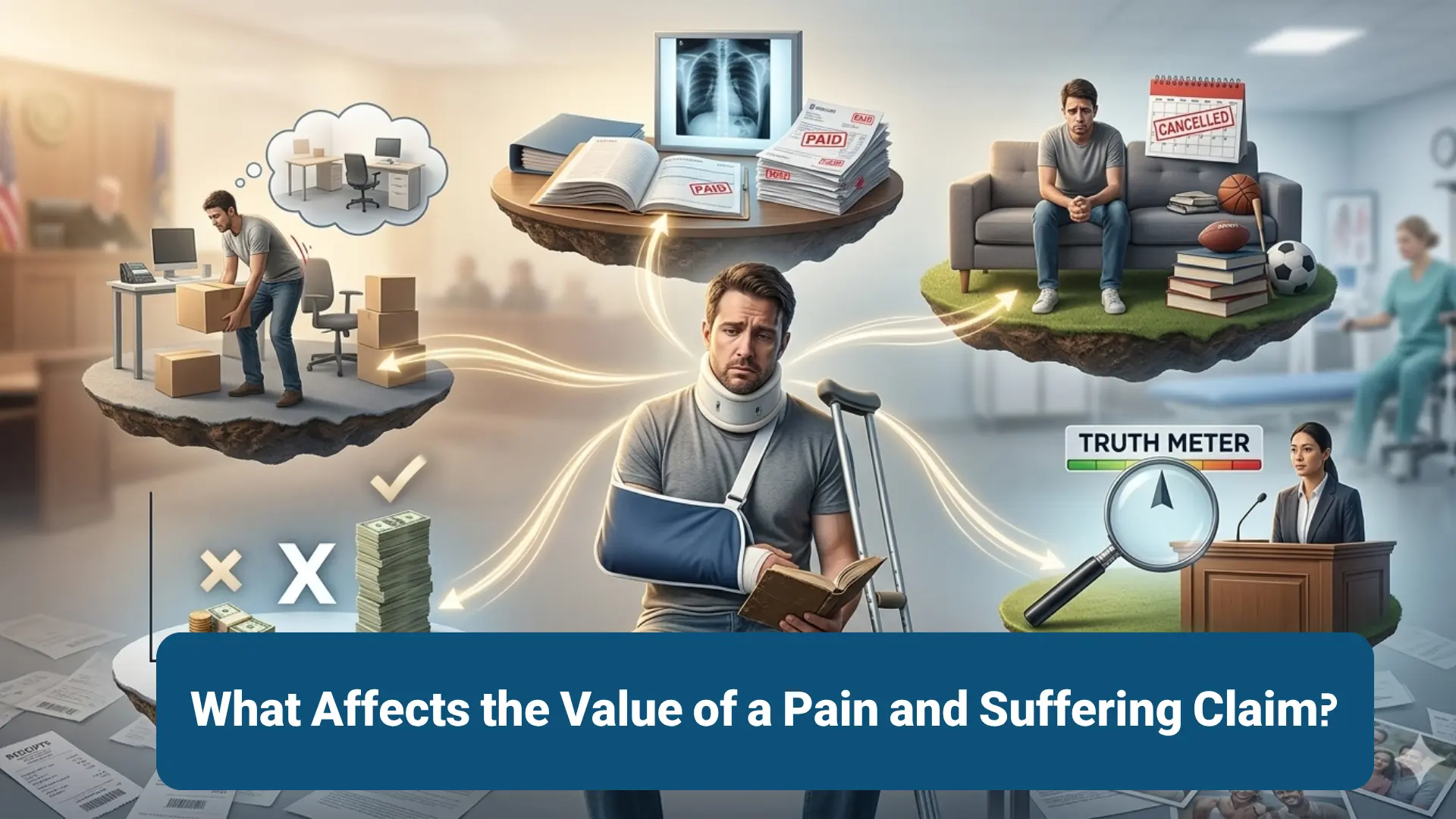
There is no fixed amount for pain and suffering damages. The value of a claim depends on several factors, including:
- Severity of the injury;
- Duration of symptoms;
- Whether the condition is permanent;
- Impact on work and daily life;
- Age and personal circumstances;
- Strength of medical evidence; and,
- Credibility and consistency of documentation.
Even similar injuries can result in very different outcomes depending on these variables.
Your compensation may also be affected if you are partially responsible. See how shared fault impacts your claim in Ontario.
Is There a Maximum Amount for Pain and Suffering?
Yes.
In Canada, there is a cap on general damages for pain and suffering established by the Supreme Court of Canada.
When adjusted for inflation, the cap is approximately:
$470,000 in 2026
However, this maximum is typically reserved for the most severe and life-altering injuries.
Most claims fall well below this level.
How Long Do You Have to File a Claim?
In Ontario, most personal injury lawsuits — including pain and suffering claims — must be started within:
2 years from the date of the accident
There may be additional notice requirements and deadlines depending on the circumstances of the case.
Missing these deadlines can prevent you from pursuing a claim.
It is also important to understand how long you have to file a personal injury claim in Ontario.
Common Mistakes That Can Affect Your Claim
After an accident, certain actions can weaken a pain and suffering claim.
These may include:
- Delaying medical treatment;
- Failing to follow medical advice;
- Inconsistent reporting of symptoms; and,
- Posting activities on social media that contradict your injuries.
Insurance companies often rely on documentation and consistency when evaluating claims.
Why Legal Guidance Matters
Pain and suffering claims in Ontario involve complex legal rules, including:
- The threshold test;
- The deductible; and,
- Detailed medical and legal evidence requirements.
Legal guidance may help injured individuals:
- Understand whether they meet the threshold;
- Properly document their injuries;
- Avoid common mistakes; and,
- Maximize potential compensation.
Most personal injury lawyers in Ontario work on a contingency fee basis, meaning legal fees are typically payable only if the claim is successful.
Frequently Asked Questions
Can I sue for pain and suffering if I was partially at fault?
Yes. Ontario follows a contributory negligence system. Your compensation may be reduced based on your percentage of fault, but you may still be eligible to make a claim.
Do all injuries qualify for pain and suffering compensation?
No. You must meet the legal threshold of a permanent and serious impairment. Minor injuries typically do not qualify.
Can I receive pain and suffering compensation without going to court?
Yes. Many claims are resolved through settlement negotiations. However, preparing for litigation often strengthens your position.
Final Thoughts
Suing for pain and suffering in Ontario is possible — but it is not automatic.
Strict legal requirements, including the threshold test and deductible rules, determine whether a claim can succeed and how much compensation may be available.
Understanding these rules early can help injured individuals make informed decisions and avoid mistakes that may affect their case.
If you have been seriously injured and are unsure about your rights, seeking legal guidance can help clarify your options and protect your long-term interests.


.svg)