

After a car accident, many people assume that fault is all-or-nothing.
Either:
You are completely at fault.
Or
The other driver is entirely responsible.
In reality, most accidents in Ontario involve shared fault.
If you were partially at fault, you may still be entitled to compensation. However, the amount you can recover may be reduced based on your level of responsibility.
Below is a clear explanation of how shared fault works, and what it means for your claim.
What Does “Partially at Fault” Mean?
Being partially at fault means that more than one party contributed to the accident.
For example:
- One driver may have been speeding;
- The other driver may have failed to yield; and,
- Both actions contributed to the collision.
In these situations, fault is divided into percentages.
Can Fault in a Car Accident Be Shared?
Yes. Fault in an Ontario auto accident can be shared between two or more drivers. One driver may have been speeding while another failed to yield, and both actions may have contributed to the collision.
For example, one driver may have been speeding while the other failed to yield the right of way. In these situations, insurance companies may assign each driver a percentage of fault based on the available evidence and Ontario’s Fault Determination Rules.
Shared fault does not automatically prevent you from recovering compensation, but it may affect the amount you ultimately receive.
How Fault Is Determined in Ontario
In Ontario, fault is typically assessed based on:
- The Insurance Act;
- The Fault Determination Rules; and,
- Evidence from the accident (police reports, witness statements, and photos).
Insurance companies use standardized rules to assign fault percentages in many types of collisions.
However, fault determination may still be disputed, especially in more complex cases.
If you’ve been involved in a collision, speaking with a car accident lawyer in Toronto can help you understand your legal position.
How Shared Fault Affects Your Compensation
If you are partially at fault, your compensation is generally reduced by your percentage of responsibility.
For example:
- If you are found to be 25% at fault, your compensation may be reduced by 25%;
- If you are found to be 50% at fault, your compensation may be reduced by 50% and;
- If you are found to be 75% at fault, your compensation may be significantly limited.
This principle applies primarily to tort claims (lawsuits).
The final amount you receive will depend on several factors, including fault percentage and how much compensation you can get after a car accident.
What Happens in a 50/50 Fault Accident?
One of the most common questions people ask is what happens if both drivers are found equally responsible for a collision.
In a 50/50 fault situation, each party may still have legal rights, but compensation in a tort claim is generally reduced according to each person’s share of responsibility. You may also remain eligible for certain no-fault accident benefits regardless of fault.
Every accident is unique, and the outcome depends on the available evidence, insurance coverage, and the specific circumstances of the collision.
If your collision occurred locally, a car accident lawyer serving Richmond Hill can help review the evidence and explain how shared fault may affect your claim.
Can You Still Receive Accident Benefits If You Were at Fault?
Yes.
Ontario’s accident benefits system is no-fault, meaning you may still receive certain benefits regardless of who caused the accident.
These may include:
- Medical and rehabilitation expenses;
- Income replacement benefits;
- Attendant care benefits; and,
- Other limited recovery-related expenses.
Your eligibility for these benefits generally does not depend on fault. If you are unsure which benefits may apply to your situation, learning more about Ontario accident compensation can help you better understand your legal options.
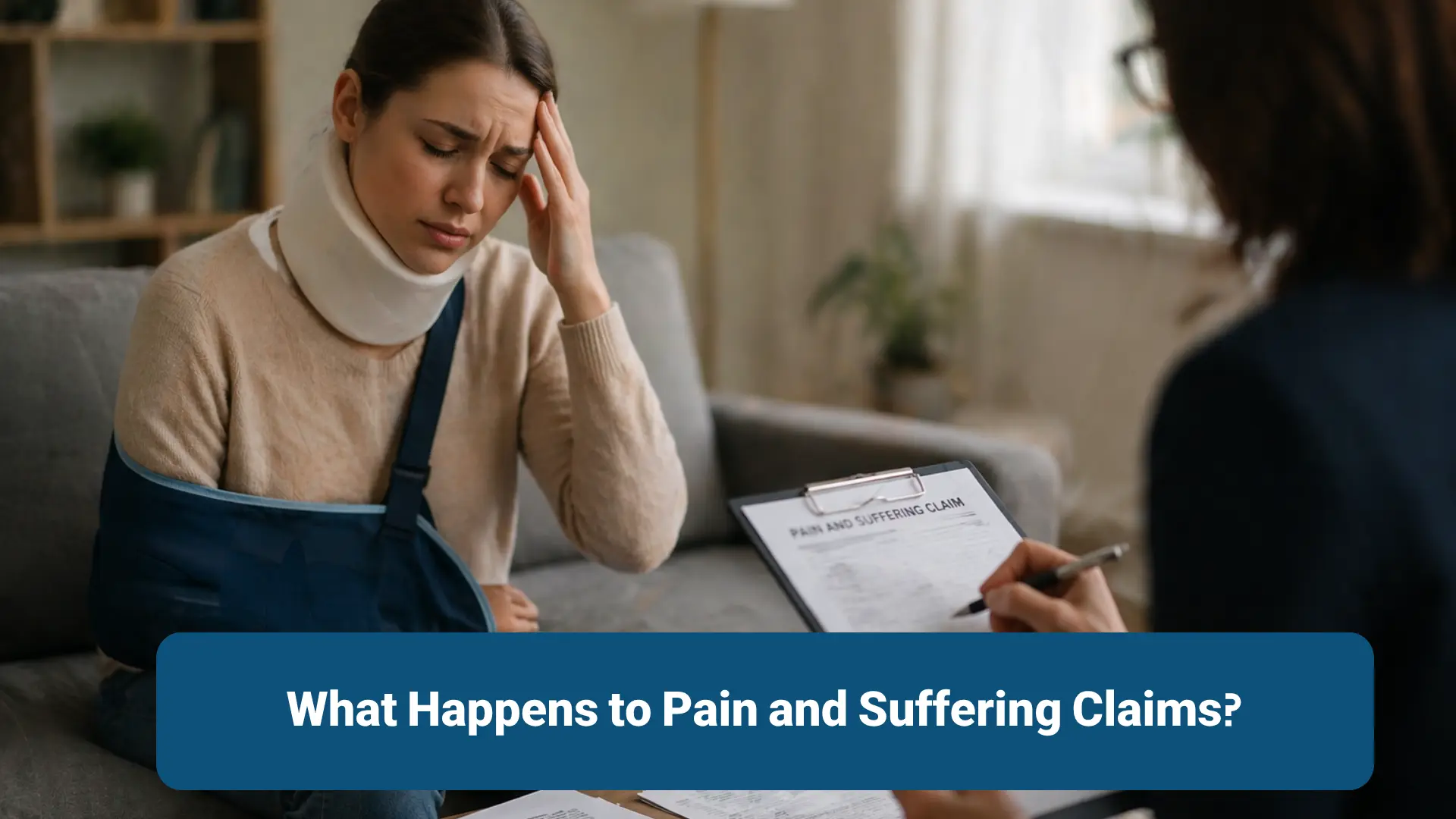
What Happens to Pain and Suffering Claims?
If you were partially at fault, you may still be able to claim compensation for pain and suffering.
However:
- Your damages may be reduced based on your percentage of fault;
- You must still meet the legal threshold; and,
- The statutory deductible may still apply.
For example:
If your total damages are $100,000 and you are found to be 30% at fault, your recoverable amount may be reduced accordingly.
Even if you are partially at fault, you may still qualify for pain and suffering compensation in Ontario.
What If You Are Found More Than 50% at Fault?
Even if you are found more than 50% at fault, this does not automatically prevent you from receiving compensation.
However:
- Your recovery in a tort claim may be significantly reduced;
- The remaining compensation may not justify litigation in some cases; and,
- Insurance coverage and policy limits may become more relevant.
Each situation depends on the specific facts of the case.
Can Fault Determination Be Challenged?
Yes.
Fault assessments made by insurance companies are not always final.
They may be challenged based on:
- Additional evidence;
- Witness testimony;
- Accident reconstruction reports; and,
- Legal arguments regarding negligence.
In some cases, fault percentages may be revised after further investigation or during litigation.
What Evidence Can Help Reduce Your Fault Percentage?
Evidence plays a critical role in shared fault cases. In some situations, additional evidence may reduce the percentage of fault assigned by an insurance company.
Useful evidence may include dashcam footage, surveillance video, photographs of the accident scene, witness statements, vehicle damage analysis, and expert accident reconstruction reports.
Obtaining legal advice early can help preserve important evidence before it becomes unavailable.
Common Situations Involving Shared Fault
Shared fault often arises in situations such as:
- Intersection accident or collisions;
- Left-turn accidents;
- Rear-end collisions with contributing factors (e.g., sudden braking);
- Lane change accidents; and,
- Multi-vehicle collisions.
These cases are rarely straightforward and often require a detailed analysis of the circumstances.
Many shared fault cases arise after motor vehicle collisions where liability is disputed. Understanding the legal process after a collision can help protect your right to compensation.
What Evidence Can Affect Fault Determination?
The outcome of a shared fault case often depends on the quality of evidence available.
Important evidence may include:
- Police reports;
- Witness statements;
- Photos or video footage;
- Dashcam recordings;
- Vehicle damage analysis; and,
- Medical documentation linking injuries to the accident.
The stronger the evidence, the better your ability to support your position will be.
Common Mistakes That Can Hurt Your Claim
After an accident, certain actions may negatively affect how fault is assessed.
These may include:
- Admitting fault at the scene;
- Providing incomplete or inconsistent statements;
- Failing to document the accident properly; and,
- Delaying medical treatment.
Even casual comments at the scene can later be used during the claims process.
Why Legal Guidance Can Be Important
Shared fault cases can be more complex than they appear.
Legal guidance may help:
- Assess the accuracy of fault allocation;
- Challenge incorrect determinations;
- Ensure proper documentation; and,
- Maximize available compensation.
Most personal injury lawyers in Ontario work on a contingency fee basis, meaning legal fees are typically payable only if the claim is successful.
Working with an experienced personal injury lawyer in Ontario can help ensure that fault is assessed fairly and your compensation is maximized.
Many people assume that being partially at fault means they have no legal options. In reality, Ontario law often allows injured individuals to pursue compensation even when fault is shared.
If you’re uncertain about your case, speaking with an experienced personal injury lawyer can help you understand your rights and the compensation that may still be available.
Frequently Asked Questions
Not necessarily. A 50/50 fault determination may reduce the compensation available in a lawsuit, but accident benefits may still be available regardless of fault.
Yes. Being partially at fault does not automatically prevent you from bringing a personal injury claim. Your compensation may simply be reduced according to your share of responsibility.
If both drivers share responsibility, each person’s compensation in a tort claim may be reduced according to their percentage of fault. However, eligibility for accident benefits is generally not affected by fault.
Yes. Ontario law recognizes that more than one driver may contribute to a collision. In these situations, fault may be divided between the parties based on the available evidence and the Fault Determination Rules.
Yes. In some cases, fault may be split evenly (equally suggests 50/50), depending on how the accident occurred.
Insurance consequences may depend on your policy, driving history, and the degree of fault assigned. This is typically handled separately from your injury claim.
Yes. Being partially at fault does not automatically prevent you from making a claim. Your compensation may be reduced, but you may still be eligible.
Final Thoughts
Being partially at fault in a car accident does not mean you lose your right to compensation.
Ontario’s system recognizes that many accidents involve shared responsibility. While your compensation may be reduced, you may still have access to both accident benefits and, in some cases, a tort claim.
Understanding how fault is determined and how it affects your claim can help you make informed decisions after an accident.
If you are unsure about your situation, seeking legal guidance may help clarify your options and protect your rights.
It is also important to understand how long you have to file a personal injury claim in Ontario.
If you’re unsure how fault may affect your personal injury claim, speaking with an experienced Toronto personal injury lawyer can help you understand your legal rights.


.svg)