

After a car accident, many injured people assume that insurance companies will fairly evaluate their claim and offer appropriate compensation.
In reality, the process is rarely that simple.
Insurance companies are businesses. Their goal is to manage risk and control costs. As a result, claims adjusters are often trained to minimize payouts wherever possible.
This does not necessarily mean the insurer is acting unlawfully. However, certain strategies are commonly used during the claims process that can significantly reduce the value of an injury settlement.
Understanding these tactics can help accident victims protect their rights and avoid mistakes that may weaken their claim.
Below are some of the most common strategies insurance companies may use during personal injury claims in Ontario.
-
Early Settlement Offers
One of the most common tactics is offering a quick settlement early in the claim process.
Shortly after an accident, an adjuster may contact the injured person and propose a payment intended to resolve the claim quickly.
At first glance, this may appear helpful. However, early settlement offers can be problematic because the full extent of an injury is often unknown in the early stages of recovery.
Some injuries — particularly soft tissue injuries, concussions, and chronic pain conditions — may take weeks or months to fully develop.
Accepting an early settlement may prevent the injured person from seeking additional compensation later.
For this reason, many legal professionals recommend waiting until injuries and associated symptoms are clearer before resolving a claim (subject to the specific circumstances of the case).
-
Downplaying the Severity of Injuries
Insurance companies frequently review medical records closely.
In some cases, they may argue that an injury is less serious than claimed.
This can occur through:
Interpreting medical records in a narrow way;
• Relying on insurer-arranged medical assessments; and,
• Suggesting that symptoms are unrelated to the accident.
For example, insurers may argue that:
- The injury falls within the Minor Injury Guideline (MIG);
- Symptoms are temporary rather than long-term; and,
- The claimant had pre-existing conditions.
If an injury is categorized under the MIG, medical and rehabilitation benefits may be limited to $3,500 under Ontario’s accident benefits system (subject to current statutory limits).
Because of this, disputes about injury classification can significantly affect the overall value of a claim.
-
Surveillance and Social Media Monitoring
Insurance companies may monitor claimants’ activities to assess whether their reported limitations are consistent with their daily behavior.
This may involve:
- Reviewing public social media posts;
- Conducting video surveillance; and,
- Monitoring online activity related to the claimant.
For example, photos or videos showing physical activity may later be used to challenge the severity of injuries.
It is important to remember that isolated moments captured online may not accurately reflect the full reality of a person’s condition.
Nevertheless, such material may still be used as part of the insurer’s evaluation of a claim.
(Claimants should be aware that publicly available social media content may potentially be reviewed or relied upon during litigation.)
-
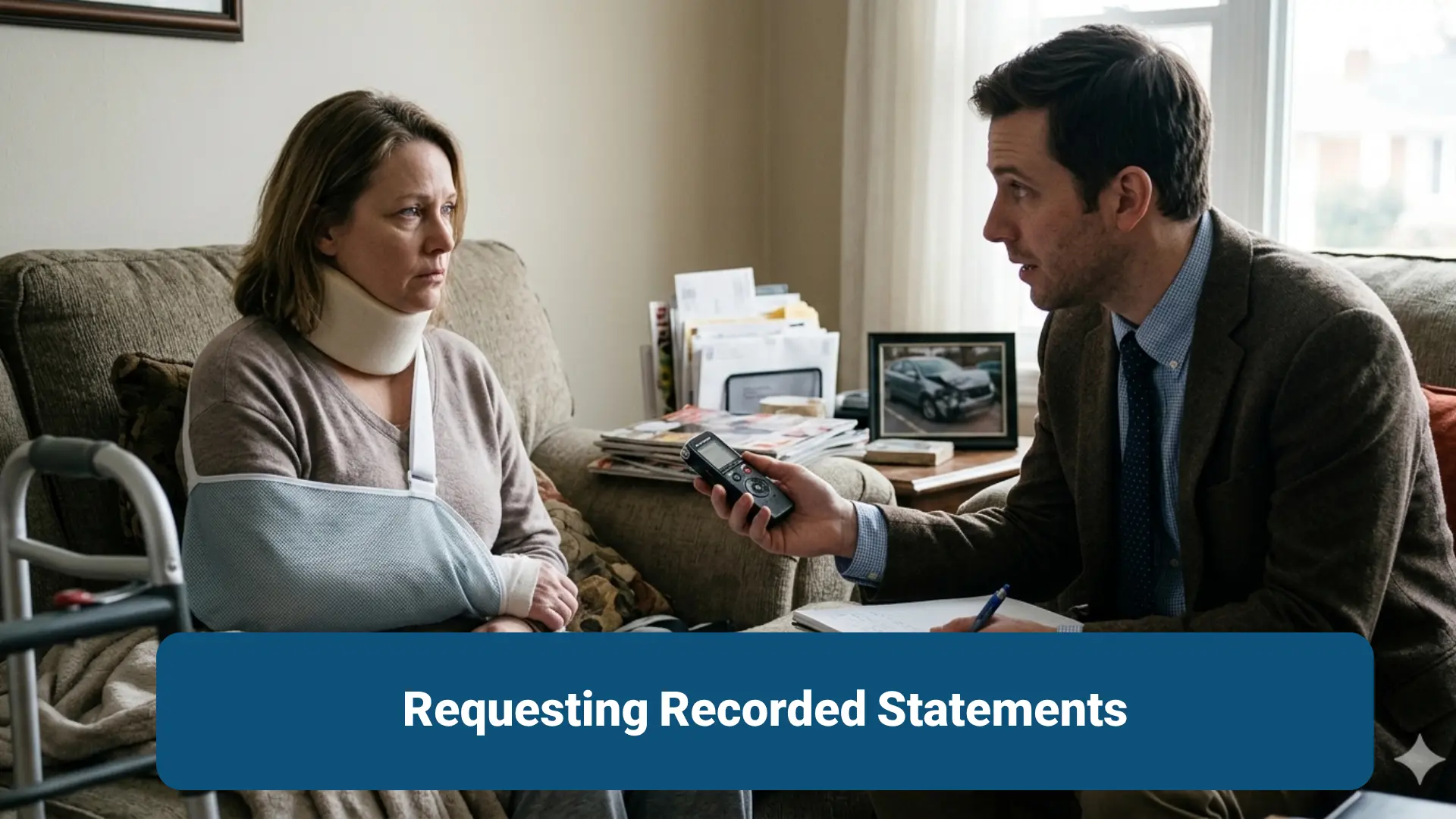
Requesting Recorded Statements
Shortly after an accident, an insurance adjuster may ask the injured person to provide a recorded statement about what happened.
While these statements may seem routine, they can sometimes be used later to challenge aspects of the claim.
For example, inconsistencies between a recorded statement and later testimony may be raised during the claims process.
Claimants should be cautious when discussing details of the accident, particularly if they are still recovering or unsure about the full extent of their injuries.
Providing factual information is important, but speculation or assumptions can create complications later in the claim.
(Individuals may wish to seek legal guidance before providing detailed recorded statements to an insurer.)
-
Delays in the Claims Process
Another tactic that injured individuals sometimes experience is delays in claim processing.
These delays may occur through:
- Repeated requests for documentation;
- Additional medical assessments; and,
- Extended review periods for benefits approval.
While insurers are entitled to verify claims, delays can place financial pressure on injured individuals who may already be dealing with medical expenses and lost income.
In some situations, this pressure may encourage claimants to accept lower settlement offers.
The claims process can be complex, and delays do not necessarily mean a claim is invalid. However, understanding the process can help claimants respond more effectively.
-
Disputing Causation
Another common issue in injury claims is causation — whether the accident actually caused the injuries for which damages are being claimed.
Insurance companies may argue that:
- Symptoms were caused by a pre-existing medical condition;
- The injuries were unrelated to the accident; and,
- The injuries would have occurred regardless of the collision.
Medical documentation often plays a crucial role in addressing these arguments.
Early treatment and consistent medical records can help establish the connection between the accident and the injuries.
-
Using the Legal Threshold and Deductible Rules
In Ontario, tort claims for pain and suffering are subject to certain legal restrictions.
These include:
- A legal threshold requirement; and,
- A statutory deductible applied to certain damage awards.
To recover damages for pain and suffering, the injured person must typically demonstrate:
A permanent and serious impairment of an important physical, mental, or psychological function.
Even if the threshold is met, a deductible may apply to general damages.
The current deductible amount is $47,913.01, unless the award exceeds $159,708.71, based on the indexed 2026 amounts.
These rules can significantly affect the final amount recovered in a personal injury claim.
Why Understanding These Tactics Matters
Insurance companies handle thousands of claims each year.
Because of this, their processes are often structured to manage claims efficiently and limit unnecessary payouts.
For injured individuals who are unfamiliar with the system, certain tactics may create confusion or frustration.
Understanding how the claims process works can help individuals:
- Recognize potential challenges in their claim;
- Avoid common mistakes when dealing with insurers;
- Protect important documentation; and,
- Make informed decisions about settlement offers.
Knowledge of the process can often reduce the risk of accepting an undervalued settlement.
When Legal Advice May Be Helpful
Personal injury claims in Ontario often involve multiple legal and insurance rules.
Speaking with a personal injury lawyer may help injured individuals:
- Understand the value of their claim;
- Navigate accident benefits and tort claims;
- Understand insurer strategies; and,
- Ensure important deadlines are not missed.
Most personal injury lawyers in Ontario operate on a contingency fee basis, meaning legal fees are typically payable only if the claim is successful.
Early legal guidance can help ensure that an injured person’s rights are protected throughout the process.
Frequently Asked Questions
Can an insurance company legally reduce my settlement?
Insurance companies may evaluate claims based on medical evidence, policy terms, and applicable law. Disputes about the value of a claim are common, particularly when the parties disagree about the severity of injuries or long-term impact.
Should I accept the first settlement offer?
Early settlement offers may not reflect the full value of a claim, especially if the long-term effects of any injuries are still unclear. Many claimants choose to review settlement offers carefully before making a decision.
Do insurance companies really monitor social media?
Publicly available social media content may sometimes be reviewed during a claim investigation or litigation process. For this reason, claimants are often advised to be cautious about what they post online following an accident.
Final Thoughts
The insurance claims process after a car accident can be complex and sometimes frustrating.
While insurance companies are entitled to investigate claims, certain strategies may significantly affect the value of an injury settlement.
Understanding these tactics can help injured individuals protect their rights and make more informed decisions throughout the claims process.
If you have been injured in an accident and have questions about how insurance companies evaluate claims, seeking legal advice may help clarify your options and protect your long-term interests.
If you are dealing with an insurance company after an accident, understanding these tactics early can help you avoid costly mistakes and protect your claim.


.svg)