
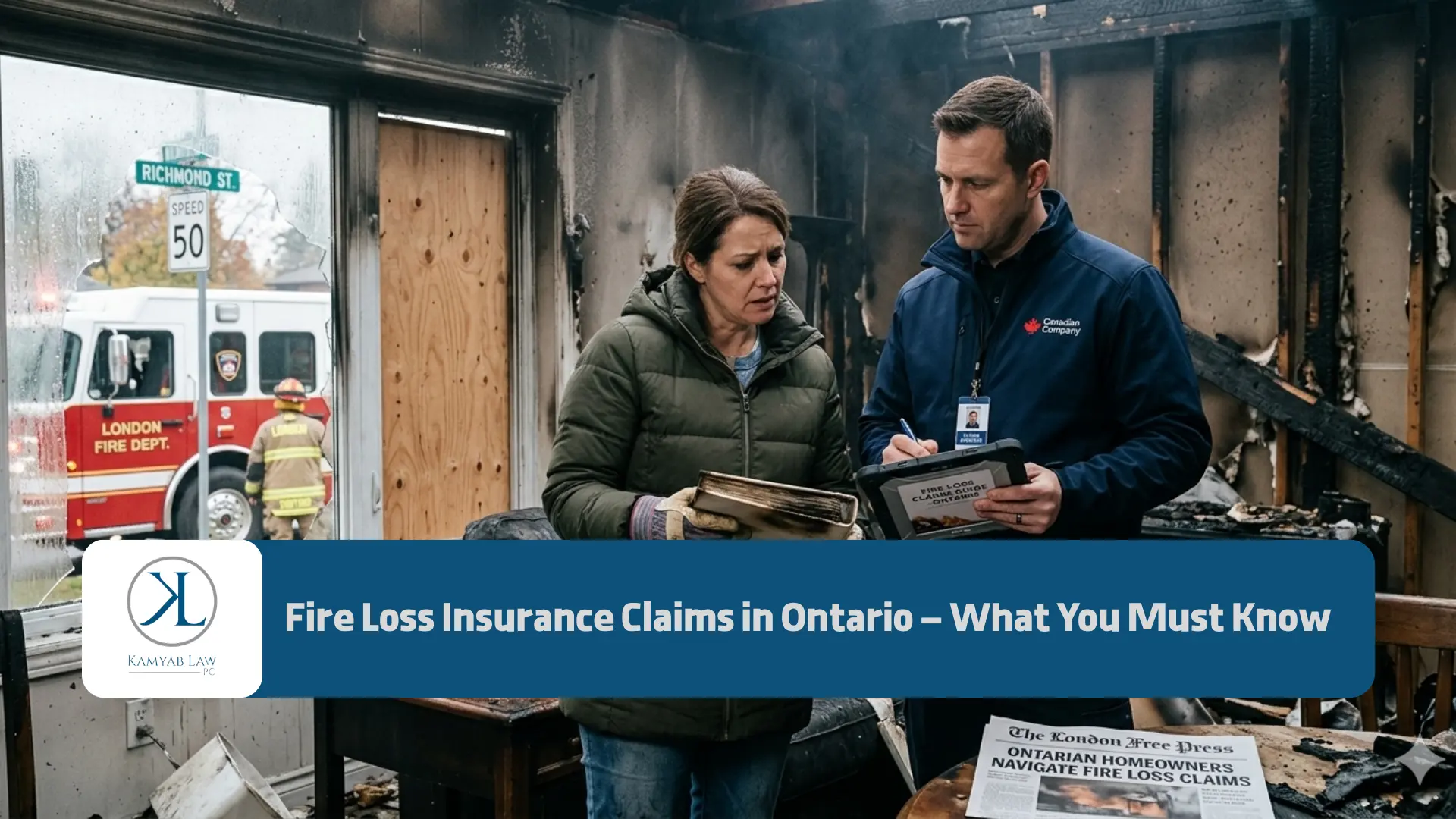
A fire can change someone’s life in a matter of minutes.
Beyond the immediate danger and property damage, many people are left dealing with:
- Insurance paperwork;
- Temporary displacement;
- Financial stress;
- Business interruption; and,
- Disputes with insurance companies.
After a fire loss, many policyholders assume their insurance company will automatically provide fair compensation.
Unfortunately, the claims process is not always straightforward.
Fire loss insurance claims in Ontario can become highly complex, particularly when:
- Coverage is disputed;
- The value of losses is challenged; and,
- The insurer delays or denies portions of the claim.
Below is a clear overview of how fire loss insurance claims work in Ontario, common issues that arise, and what policyholders should know to protect their rights.
What Is a Fire Loss Insurance Claim?
A fire loss insurance claim is a claim made under an insurance policy for damages caused by:
- Fire;
- Smoke;
- Heat;
- Water used to extinguish the fire; and,
- Related property damage.
Depending on the policy, coverage may apply to:
- Residential properties;
- Commercial buildings;
- Personal belongings;
- Business equipment; and,
- Additional living expenses or business interruption losses.
The exact coverage available depends on the wording of the insurance policy.
What Types of Damage May Be Covered?
Many people assume fire insurance only covers direct fire damage.
In reality, claims may also include secondary losses resulting from the incident.
Coverage may potentially include:
- Structural property damage;
- Smoke contamination;
- Water damage from firefighting efforts;
- Damage to personal belongings;
- Temporary accommodation expenses;
- Loss of business income;
- Cleanup and restoration costs; and,
- Professional remediation expenses.
In commercial claims, business interruption losses can sometimes become one of the largest components of the claim.
What Should You Do Immediately After a Fire?
The steps taken after a fire can significantly affect the outcome of an insurance claim.
Important steps may include:
- Contacting emergency services;
- Notifying the insurance company promptly;
- Securing the property from further damage;
- Taking photographs or videos of the damage;
- Preparing an inventory of damaged items; and,
- Keeping receipts for emergency expenses.
Documentation is extremely important during fire loss claims.
The more evidence available, the easier it may be to establish the extent of the losses.
Why Fire Loss Claims Often Become Disputed
Fire loss claims are frequently more complicated than standard property claims.
Disputes may arise regarding the:
- Cause of the fire;
- Scope of damage;
- Value of property losses;
- Policy exclusions; and,
- Compliance with policy conditions.
Insurance companies often conduct detailed investigations before approving substantial fire loss claims.
These investigations may involve:
- Fire investigators;
- Engineers;
- Restoration experts; and,
- Insurance adjusters.
The process can sometimes become stressful and adversarial for policyholders.
Common Reasons Insurance Companies Deny Fire Claims
Insurance companies may deny or limit claims for various reasons.
Some common issues include:
- Allegations of arson or intentional damage;
- Alleged misrepresentation on the insurance application;
- Disputes about ownership of damaged property;
- Failure to comply with policy conditions;
- Questions regarding maintenance of the property; and,
- Disagreements regarding the value of losses.
In some cases, insurers may also argue that certain losses fall outside the scope of coverage.
A denial does not automatically mean the insurer’s position is correct.
Coverage disputes often depend heavily on:
- Policy wording;
- Evidence; and,
- Expert analysis.
Insurance disputes involving delayed, denied, or underpaid claims are not limited to fire losses and may also arise in other types of insurance claims.
Insurance denials in Ontario may also arise in other types of policies, including life insurance disputes involving contestability periods or alleged non-disclosure.
What Is Business Interruption Coverage?
For commercial property owners, one of the most significant losses after a fire may involve interruption to business operations.
Business interruption coverage may potentially compensate for:
- Lost income;
- Operating expenses;
- Temporary relocation costs; and,
- Certain ongoing business obligations.
Calculating business interruption losses can be highly technical.
Disputes often arise regarding:
- Duration of interruption;
- Projected revenue;
- Financial documentation; and,
- Mitigation efforts.
These claims frequently require accounting and financial analysis.
Water used to extinguish a fire can sometimes create moisture issues that eventually lead to mold damage.
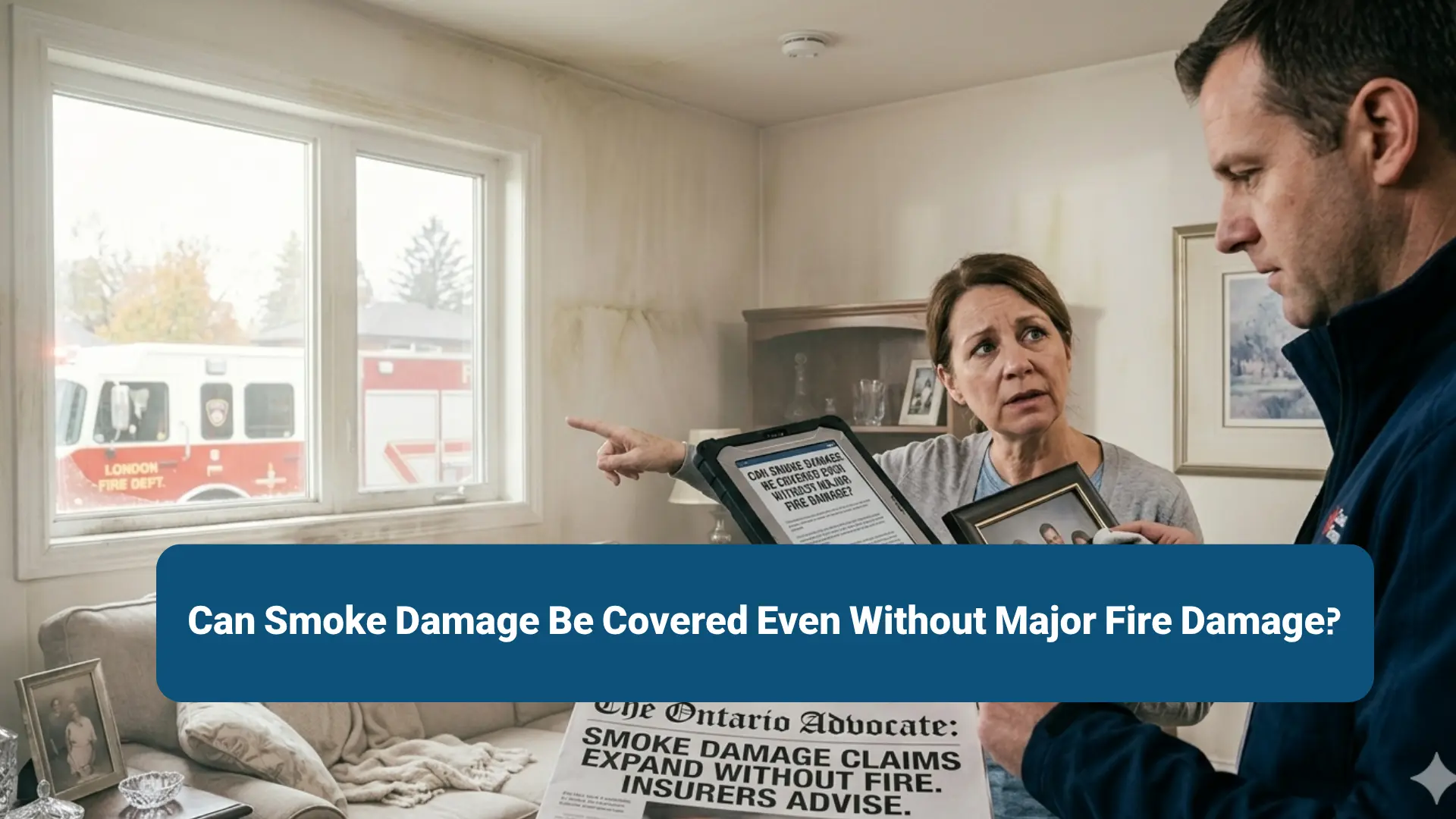
Can Smoke Damage Be Covered Even Without Major Fire Damage?
Yes.
Smoke damage can sometimes result in substantial losses even when the fire itself is relatively limited.
Smoke contamination may affect:
- Furniture;
- Electronics;
- Clothing;
- Inventory; and,
- Ventilation systems.
In some cases, smoke odor and contamination may render property unusable unless professional remediation occurs.
Whether smoke damage is covered depends on the:
- Policy wording;
- Extent of contamination; and,
- Supporting evidence.
What If the Insurance Settlement Offer Is Too Low?
One of the most common disputes in fire loss claims involves undervaluation of damages.
Insurance companies may sometimes:
- Disagree with contractor estimates;
- Challenge replacement costs;
- Depreciate property values; and,
- Limit reimbursement amounts.
Policyholders are not necessarily required to accept the first offer presented by the insurer.
Independent evidence such as:
- Contractor reports;
- Engineering assessments;
- Inventory documentation; and,
- Expert evaluations may become important in resolving disputes.
Disputes regarding insurance compensation can also arise in car accident and other injury-related insurance claims in Ontario.
How Long Does a Fire Loss Claim Take?
There is no fixed timeline.
Some straightforward claims may resolve relatively quickly.
However, larger or disputed claims can take significantly longer, particularly where:
- Extensive investigations are involved;
- Coverage disputes arise; and,
- Litigation becomes necessary.
The timeline often depends on:
- Complexity of the losses;
- Cooperation between the parties; and,
- Availability of supporting documentation.
What Is the Duty to Mitigate Damage?
After a fire, policyholders are generally expected to take reasonable steps to prevent further damage.
This may include:
- Securing exposed areas;
- Preventing water intrusion;
- Removing hazardous conditions; and,
- Arranging temporary protection measures.
Failure to mitigate additional damage may potentially affect portions of the claim.
However, the reasonableness of mitigation efforts often depends on the circumstances following the incident.
Can You Sue Your Insurance Company?
In some situations, legal action may become necessary.
This may occur where:
- A claim is wrongfully denied;
- The insurer acts unfairly;
- Settlement negotiations fail; and,
- Significant losses remain unpaid.
Insurance disputes may involve:
- Breach of contract claims;
- Coverage litigation; and,
- Bad faith insurance allegations in certain circumstances.
Insurance litigation can become highly technical because it often involves:
- Detailed policy interpretation;
- Expert evidence; and,
- Complex valuation issues.
Why Legal Guidance May Be Important
Fire loss claims can involve substantial financial consequences for homeowners and businesses.
Legal guidance may help policyholders:
- Understand their coverage;
- Navigate complex investigations;
- Challenge unfair denials;
- Properly document losses; and,
- Negotiate fair compensation.
In disputed claims, early legal involvement may also help preserve evidence and avoid procedural mistakes.
Individuals dealing with complex insurance disputes may also benefit from understanding their broader legal options involving personal injury and compensation-related matters.
Frequently Asked Questions
Does homeowners’ insurance automatically cover all fire damage?
Not necessarily. Coverage depends on the specific insurance policy, exclusions, and circumstances surrounding the loss.
Can insurance companies investigate the cause of the fire?
Yes. Insurers commonly investigate the origin and cause of fires, particularly in significant loss claims.
What if my insurance claim is delayed?
Delays do not automatically mean a claim is invalid. However, prolonged or unreasonable delays may create additional legal and financial issues depending on the circumstances.
In some situations, an insurer’s unreasonable delay or denial may constitute bad faith under Ontario law.
Final Thoughts
Fire losses can create overwhelming financial and emotional pressure for individuals and businesses alike.
While insurance is intended to provide protection after catastrophic events, disputes regarding coverage, valuation, and compensation are not uncommon in Ontario fire loss claims.
Understanding how the claims process works, and what rights policyholders may have, can help individuals make more informed decisions during an already difficult situation.
If you are dealing with a disputed or delayed fire loss insurance claim in Ontario, seeking legal guidance may help clarify your options and protect your financial interests.


.svg)