
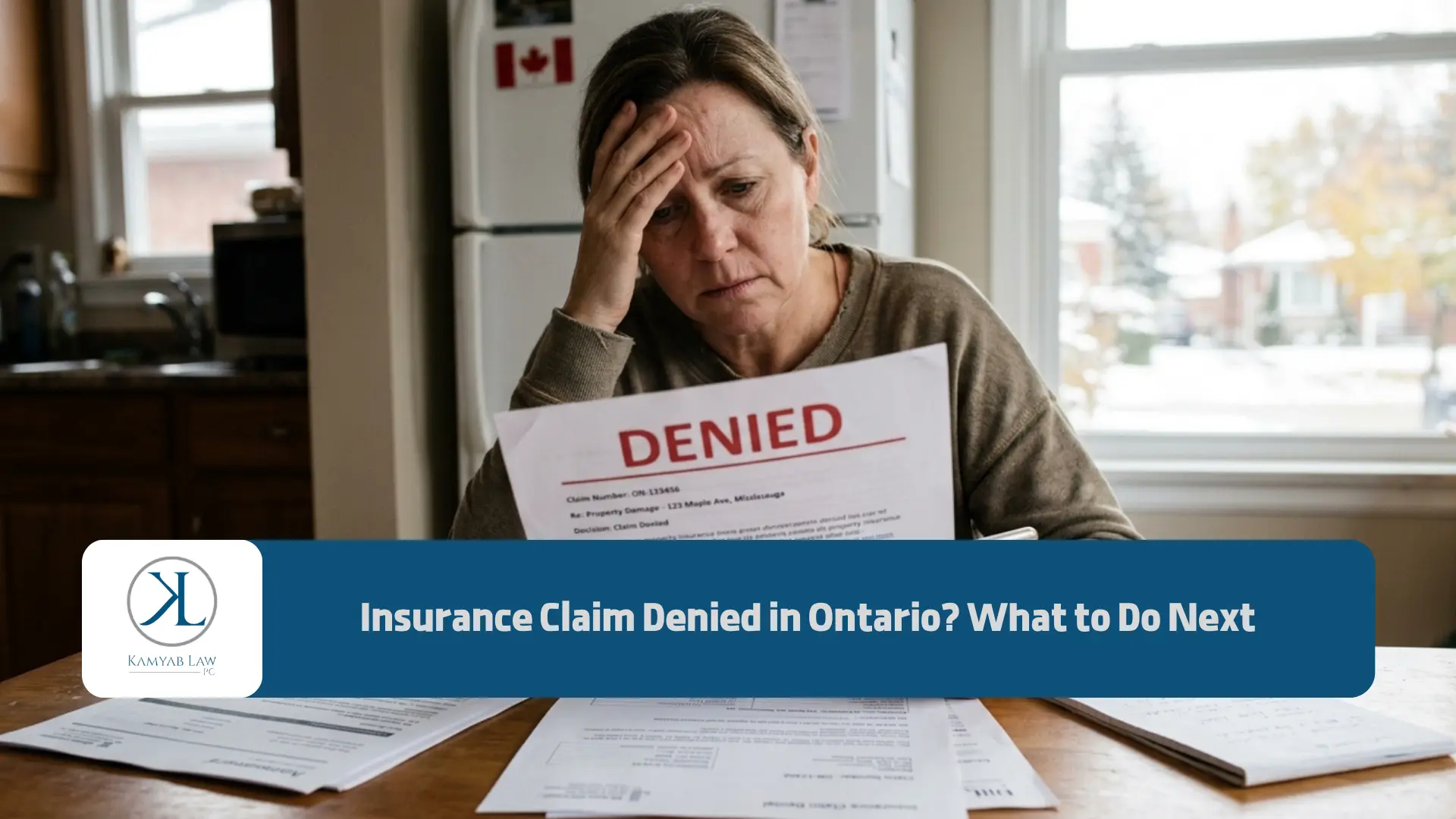
Having an insurance claim denied can be frustrating, especially when you expected your policy to protect you during a difficult time. A denial, however, does not necessarily mean that the insurer’s decision is final or that you have no further options.
Depending on the type of insurance policy, the wording of the contract, the reason for the denial, and the circumstances of the claim, you may be able to challenge the insurer’s decision, provide additional evidence, use an internal complaint or appeal process, or pursue legal action.
If your insurance claim has been denied in Ontario, it is important to understand why the claim was denied, what your policy actually covers, what deadlines may apply, and what steps you can take to protect your rights.
What Does It Mean When an Insurance Claim Is Denied?
An insurance claim denial means that the insurer has decided not to pay some or all of the benefits or compensation requested under the policy.
The insurer should identify the basis for its decision. Depending on the circumstances, the denial may relate to the terms of the policy, an exclusion, eligibility requirements, information submitted with the claim, or the insurer’s assessment of the evidence.
A denied claim should not automatically be treated as the end of the matter. The policyholder should carefully review the insurer’s explanation and the relevant provisions of the insurance policy before deciding what to do next.
Common Reasons Insurance Claims Are Denied
Insurance claims can be denied for many different reasons. The exact reason will depend on the type of policy and the circumstances surrounding the claim.
Common reasons may include:
-
The Insurer Says the Loss Is Not Covered
Insurance policies define which losses and events are covered. An insurer may deny a claim because it believes the circumstances fall outside the policy’s coverage.
The wording of the policy is therefore important when assessing whether the insurer’s interpretation is justified.
-
The Insurer Relies on a Policy Exclusion
Insurance contracts commonly contain exclusions that remove certain risks or circumstances from coverage.
A denial letter may rely on one or more exclusions. Whether an exclusion actually applies can depend on both the wording of the policy and the facts surrounding the claim.
-
Missing or Insufficient Documentation
Insurers often require documentation to assess a claim.
Depending on the type of insurance involved, this may include:
- medical records;
- financial information;
- proof of loss;
- employment records;
- expert reports;
- photographs;
- receipts; or,
- other supporting evidence.
A claim may be delayed or denied when the insurer considers the evidence incomplete or insufficient.
-
Alleged Misrepresentation or Non-Disclosure
An insurer may allege that important information was inaccurate, incomplete, or not disclosed when the insurance policy was obtained or when the claim was submitted.
The legal consequences of an alleged misrepresentation can depend on the nature and materiality of the information, the type of policy, and the applicable law.
-
Disagreement About Medical Evidence
This issue frequently arises in disability, life, and critical illness insurance claims.
The policyholder’s treating physicians and the insurer may disagree about matters such as diagnosis, functional limitations, ability to work, prognosis, or whether the medical condition satisfies the policy’s definition.
-
Missed Policy Requirements or Deadlines
Insurance policies may contain requirements concerning notice, proof of loss, supporting documentation, appeals, or other procedural steps.
Failing to comply with a requirement can create problems with a claim. However, the legal effect of a missed requirement depends on the policy and applicable law and should be assessed on the specific facts.
What Types of Insurance Claims Can Be Denied?
Insurance disputes can arise under many different types of policies.
Life Insurance Claims
A life insurance claim may be disputed for reasons involving policy status, exclusions, alleged misrepresentation, beneficiary issues, or other provisions of the insurance contract.
If you are dealing specifically with this situation, read our guide Life Insurance Claims Denied in Ontario.
Long-Term Disability Claims
Long-term disability insurers may deny claims because they dispute whether the claimant meets the policy’s definition of disability or whether the available medical evidence supports an inability to work.
Some claims may also be terminated after benefits have already been paid, including when the applicable definition of disability changes under the policy.
Learn more about Long-Term Disability Claims in Ontario.
Critical Illness Claims
Critical illness insurance generally provides benefits when the insured satisfies the specific definition of a covered condition contained in the policy.
Disputes can arise over medical evidence, policy definitions, exclusions, or whether the condition meets the contractual requirements.
Learn more about Critical Illness Insurance Claims.
Property Loss Claims
Property insurance disputes can involve coverage for damage caused by events such as fire, water damage, theft, or other insured losses.
Disputes may arise over the cause of the loss, exclusions, valuation of the damage, compliance with policy conditions, or the amount the insurer is prepared to pay.
Learn more about Property Loss Claims.
If your claim involves fire or smoke damage, learn how our fire insurance claim lawyers assist with denied, delayed, and underpaid fire loss claims.
What Should You Do After an Insurance Claim Is Denied?
The steps you take after receiving a denial can affect your ability to challenge the insurer’s decision.
-
Read the Denial Letter Carefully
Start by identifying the insurer’s stated reason for denying the claim.
Look for references to:
- policy provisions;
- exclusions;
- definitions;
- medical evidence;
- missing documents;
- deadlines; and,
- appeal or complaint procedures.
Do not assume that the insurer’s interpretation of the policy is necessarily the only possible interpretation.
-
Obtain and Review Your Insurance Policy
The denial letter should be considered together with the actual insurance contract.
Review the relevant definitions, coverage provisions, exclusions, conditions and any endorsements that may modify the policy.
-
Preserve Your Documents
Keep copies of all documents connected to the claim, including:
- the insurance policy;
- application documents;
- the denial letter;
- emails and correspondence;
- medical records;
- proof of loss;
- photographs;
- receipts;
- expert reports; and,
- notes of conversations with the insurer.
A clear documentary record can become important if the dispute continues.
-
Ask for Clarification Where Necessary
If the insurer’s explanation is unclear, consider requesting a more detailed explanation of the basis for the decision and the provisions of the policy being relied upon.
-
Be Careful About Deadlines
Do not assume that an internal review, complaint, negotiation, or ongoing communication with an insurer automatically protects a legal limitation period.
Different deadlines can apply depending on the policy and the nature of the dispute. Obtaining legal advice early can help determine which deadlines apply to your particular claim.
Can You Appeal a Denied Insurance Claim?
Depending on the insurer and type of policy, there may be an internal review, appeal, or complaint procedure available.
An effective challenge may require more than simply asking the insurer to reconsider the same information. Depending on the reason for denial, additional evidence could include:
- updated medical reports;
- specialist opinions;
- employment information;
- financial records;
- expert assessments;
- additional proof of loss; or,
- evidence addressing the specific reason given for the denial.
Ontario’s Financial Services Regulatory Authority recommends that consumers with complaints first contact the insurance company’s Complaint Officer and follow the insurer’s complaint process. The insurer can then issue a final position letter explaining its decision.
If the dispute cannot be resolved internally, an additional complaint, dispute-resolution or legal options may be available depending on the nature of the insurance product and claim.
Can You Sue an Insurance Company After a Claim Is Denied?
In some circumstances, legal proceedings against an insurer may be appropriate.
Whether litigation is available and advisable depends on factors including:
- the terms of the insurance contract;
- the reason for denial;
- the evidence supporting the claim;
- the amount of benefits or damages involved;
- applicable limitation periods; and,
- the insurer’s conduct in handling the claim.
A disagreement about coverage does not automatically mean that an insurer has acted in bad faith.
However, insurer conduct may become a separate legal issue in some cases. If you believe an insurer has handled your claim improperly, read Can You Sue an Insurance Company for Bad Faith in Ontario?
How Long Do You Have to Challenge an Insurance Claim Denial in Ontario?
Ontario’s Limitations Act, 2002 establishes a general basic limitation period of two years from the date a claim is discovered. The Act also contains rules governing when a claim is considered discovered.
However, insurance disputes should not be approached on the assumption that every claim simply has a two-year deadline.
Different statutory provisions, policy terms and dispute mechanisms can affect the applicable time limit. For example, Ontario’s Insurance Act contains specific limitation rules for certain insurance disputes.
For this reason, anyone considering challenging an insurance denial should obtain advice about the limitation period applicable to their particular policy and circumstances rather than relying on a general deadline.
When Should You Contact an Insurance Lawyer?
Consider seeking legal advice when:
- a significant insurance claim has been denied;
- the insurer relies on an exclusion you do not understand or disagree with;
- disability benefits have been denied or terminated;
- medical evidence is being disputed;
- the insurer alleges misrepresentation or non-disclosure;
- a substantial property loss has not been covered;
- an internal appeal has been unsuccessful;
- you are concerned about a limitation period; or,
- you believe the insurer’s handling of the claim may have been improper.
An insurance lawyer can review the policy, denial letter and supporting evidence to determine what options may be available.
Depending on the circumstances, this may involve providing additional evidence, challenging the insurer’s interpretation of the policy, negotiating with the insurer, pursuing an available dispute-resolution process, or commencing litigation.
Frequently Asked Questions About Denied Insurance Claims in Ontario
Potentially, but denial of a claim by itself does not establish bad faith. The insurer’s conduct and the circumstances surrounding its handling of the claim must be assessed separately.
No general statement like that should be relied upon without reviewing the particular claim. Ontario has a general two-year basic limitation period under the Limitations Act, 2002, but other legislation and circumstances may affect the deadline applicable to a particular insurance dispute.
Yes. Financial Services Regulatory Authority of Ontario (FSRA) directs consumers to begin by using the insurance company’s complaint process and contacting its Complaint Officer. A final position letter can then document the insurer’s final response.
The appropriate next step after that depends on the type of insurance policy and nature of the dispute.
That depends on the complexity and value of the claim. For a significant claim, particularly where coverage, medical evidence, alleged misrepresentation or a limitation period is disputed, obtaining legal advice before submitting an appeal can help ensure that the issues are properly addressed.
Potentially. An insurer may reconsider its position when additional evidence or information is provided or when its decision is challenged through an available review or complaint process.
Not necessarily. A denial represents the insurer’s position on the claim, but depending on the policy and circumstances, you may have options to challenge that decision through additional evidence, an internal review or complaint process, negotiation, dispute resolution, or legal proceedings.
Speak With an Insurance Lawyer About Your Denied Claim
If your insurance claim has been denied, understanding the insurer’s reasoning and the terms of your policy is an important first step.
Kamyab Law assists clients with insurance disputes involving life insurance, long-term disability, critical illness, property loss and other denied claims.
Our legal team can review your policy, denial letter and supporting evidence and explain the options that may be available based on your circumstances.
Contact Kamyab Law to discuss your denied insurance claim and learn about your legal options.
Request a Consultation


.svg)